Address
304 North Cardinal St.
Dorchester Center, MA 02124
Work Hours
Monday to Friday: 7AM - 7PM
Weekend: 10AM - 5PM
Address
304 North Cardinal St.
Dorchester Center, MA 02124
Work Hours
Monday to Friday: 7AM - 7PM
Weekend: 10AM - 5PM

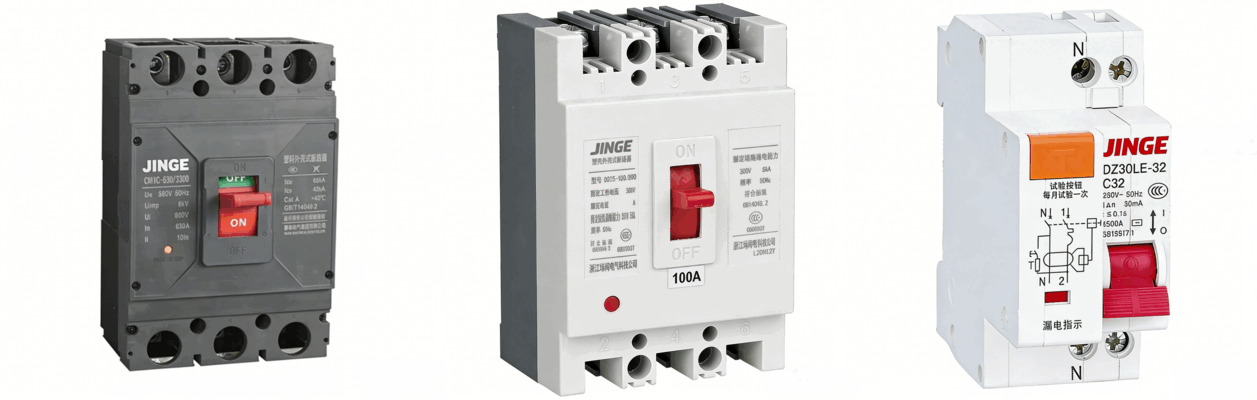
How to Choose the Right Low Voltage Circuit Breaker for Industrial & Commercial Use | Full Guide for Non-Experts
For B2B buyers, project managers, contractors, and distributors who are not professional electrical engineers, choosing a suitable low-voltage circuit breaker can feel confusing. Many buyers only focus on price or appearance, but end up facing frequent tripping, equipment burnout, unqualified acceptance, or even safety hazards.
In fact, selecting a circuit breaker is not difficult. You only need to confirm four core points: voltage, current, breaking capacity, and protection function. This article uses plain language to help you complete the selection correctly, without professional knowledge, and avoid 90% of common mistakes.
1. First: Confirm the Basic Environment & Application
Before selecting any model, you must clarify the following basic conditions:
Different environments require different protection levels, certifications, and structures. For example, outdoor and humid areas need higher protection and leakage protection; corrosive environments need anti-corrosion treatment.
2. Second: Confirm 3 Core Technical Parameters (Most Important)
You do not need to understand complex theories. Just remember these three key points:
(1) Rated Voltage (Ue)
(2) Rated Current (In)
(3) Short-Circuit Breaking Capacity (Icu)
This is the most easily overlooked parameter.
3. Third: Choose the Correct Type According to Load
For Lighting, Small Power, Office, Shops
→ Choose MCB (Miniature Circuit Breaker)
For Feeders, Motors, Pumps, Fans, Compressors
→ Choose MCCB (Molded Case Circuit Breaker)
For Main Incoming Line, Transformer Outlet, Large Busbar
→ Choose ACB (Air Circuit Breaker)
For Bathrooms, Kitchens, Outdoor, Construction Sites
→ Choose RCBO / RCCB
4. Fourth: Certifications That Must Be Checked for Export & Projects
For B2B foreign trade buyers, certifications directly affect customs clearance and acceptance.
Without certification, products may be detained or rejected.
5. Common Mistakes to Avoid
FAQ (Frequently Asked Questions by Global Buyers)
Q1: How to know if the breaking capacity is enough?
A: You can ask your electrical designer or refer to the standard configuration of similar projects. For safety, choose a higher grade.
Q2: Can MCB be used for motor circuits?
A: Only for very small motors. For motors above 1.5kW, use MCCB to avoid tripping when starting.
Q3: What is the difference between 3P and 4P breakers?
A: 3P is used for three-phase three-wire systems; 4P is used for three-phase four-wire systems with N line. Most commercial and industrial projects recommend 4P.
Q4: Can breakers work properly at high altitude?
A: Above 1000m, the current and breaking capacity need to be derated. You must inform the manufacturer.
Q5: How long is the service life of a circuit breaker?
A: Normally 8–12 years. It should be replaced if it frequently trips, heats up, or malfunctions.
Conclusion
For industrial and commercial B2B projects, the correct selection logic of low-voltage circuit breakers is:
Confirm environment → confirm voltage/current/breaking capacity → select type → check certification → avoid common mistakes
You do not need to be an electrical expert. Following this guide can ensure safe, reliable, and compliant selection.
