Address
304 North Cardinal St.
Dorchester Center, MA 02124
Work Hours
Monday to Friday: 7AM - 7PM
Weekend: 10AM - 5PM
Address
304 North Cardinal St.
Dorchester Center, MA 02124
Work Hours
Monday to Friday: 7AM - 7PM
Weekend: 10AM - 5PM

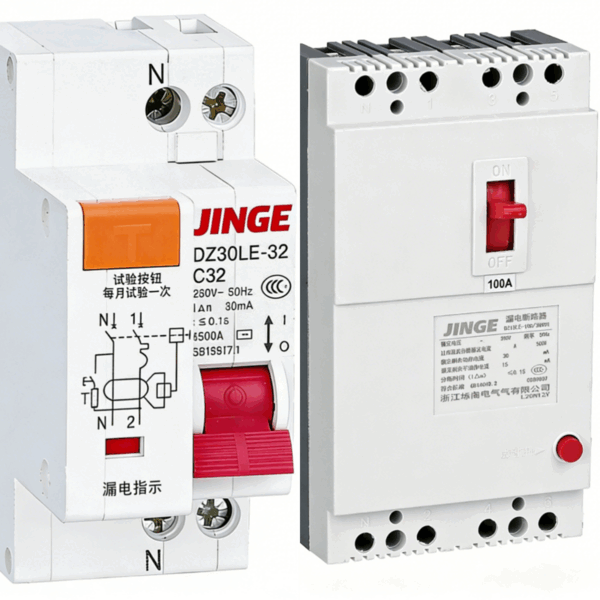
Circuit Breaker Key Parameters Explained: In, Icu, Ics, Ir, Im — Understand in 5 Minutes
Many B2B buyers see a bunch of English letters on a circuit breaker: In, Icu, Ics, Ir, Im… and feel completely confused. In fact, these parameters are not difficult. They are just safety indicators to help you choose the right product.
Once you understand these 5 parameters, you will never be cheated by suppliers, and you can choose breakers safely and correctly even without an engineering background.
1. In — Rated Current (The Most Basic Parameter)
Meaning: The normal working current of the circuit breaker.
Example: A 10kW motor uses about 20A, you can choose In = 25A or 32A.
2. Icu — Ultimate Short-Circuit Breaking Capacity
Meaning: The maximum short-circuit current that can be cut OFF safely.
3. Ics — Service Breaking Capacity
Meaning: The breaking capacity that can still be used normally after tripping.
4. Ir — Long-Time Delay Overload Protection
Meaning: Protection against slow overheating.
5. Im — Short-Time Delay Short-Circuit Protection
Meaning: Protection against sudden short-circuit current.
Simple Summary of Parameters
You only need to remember:
In matches load; Icu matches system; Ir and Im protect equipment.
FAQ
Q1: Which parameter is most easily ignored but most dangerous?
A: Icu. If Icu is too small, short circuit can destroy the whole power system.
Q2: Can I use a breaker with In larger than load?
A: Yes, but not too large. Otherwise it cannot protect cables.
Q3: What is the difference between Icu and Ics?
A: Icu is ultimate limit; Ics is usable capacity.
Q4: Are parameters the same for MCB, MCCB, ACB?
A: The meaning is the same, but the range is different. ACB has higher current and breaking capacity.
Q5: Do parameters affect price?
A: Yes. Higher Icu and Ics mean higher cost, but safer.
Conclusion
Parameters are not mysterious codes. They are just safety standards. As long as you understand In, Icu, Ics, Ir, Im, you can choose breakers confidently, avoid risks, and ensure your project runs safely.
