Address
304 North Cardinal St.
Dorchester Center, MA 02124
Work Hours
Monday to Friday: 7AM - 7PM
Weekend: 10AM - 5PM
Address
304 North Cardinal St.
Dorchester Center, MA 02124
Work Hours
Monday to Friday: 7AM - 7PM
Weekend: 10AM - 5PM

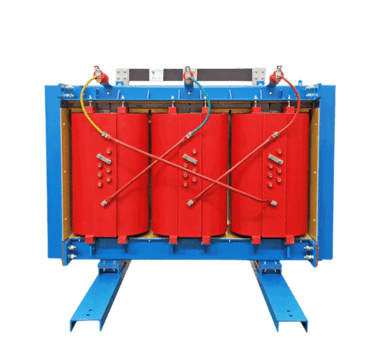
Complete guide to transformers for data centers & mission-critical facilities—K-factor transformers, harmonic filtering, UPS integration, isolation, redundancy and reliable power backup.
Data centers, hospitals, financial data hubs, and industrial control rooms represent mission-critical facilities where even a momentary power interruption can lead to massive financial losses, service outages, or risks to human safety. These loads are highly non-linear, generate severe harmonics, rely on UPS systems for continuity, and demand ultra-stable, isolated power with zero unplanned downtime.
Standard transformers are often unable to withstand the harmonic-heavy environment and continuous high-load operation typical of data centers. For engineers, facility managers, and B2B buyers, selecting K-rated transformers, isolation transformers, and UPS-matched units is essential to maintain power quality, protect sensitive IT equipment, and ensure 24/7 operational stability.
This article follows your structure: data center load characteristics → harmonic challenges → isolation design → redundancy architecture → model selection → FAQ, with focus on K-factor, harmonic filtering, UPS compatibility, and mission-critical reliability.
1. Load Characteristics of Data Centers & Critical Facilities
Data center and critical-load environments have unique power demands that directly define transformer requirements:
Servers, storage, switches, and cloud hardware run 24/7 at high load factors, often 70%–90% continuously.
Switch-mode power supplies (SMPS), UPS inverters, VFDs, and charging systems generate high 3rd, 5th, 7th, 11th, and 13th harmonics.
Total harmonic distortion (THD) commonly reaches 15%–30% without filtering.
Transformers must work seamlessly with double-conversion UPS systems, supporting both normal grid power and inverter-fed backup power.
Power can shift rapidly between grid, UPS, and generator sources, requiring fast voltage regulation.
Failures, overheating, or neutral overheating are not acceptable. Redundancy and thermal margin are mandatory.
Data centers prioritize compact footprint, low loss, and low noise to reduce cooling and real-estate costs.
2. Harmonic Challenges & K-Rated Transformer Solutions
Harmonics are the biggest threat to standard transformers in data centers:
K-Rated Transformers (K-Factor)
K-factor classifies a transformer’s ability to withstand harmonic heating:
JGELEC K-rated transformers are designed with:
This eliminates overheating and extends service life under continuous non-linear loading.
Harmonic Filtering & Compatibility
To further protect the transformer and grid:
K-rated transformers do not eliminate harmonics but safely tolerate them without derating.
3. Isolation Transformers for Mission-Critical Protection
Isolation transformers are widely required in data centers and critical facilities for three core purposes:
Electrical Isolation
Noise & Surge Suppression
Isolation transformers attenuate high-frequency noise from the grid and UPS, improving power quality for IT hardware.
Neutral & Ground Stability
Critical for:
Many designs include delta-wye configuration to provide a stable, derived neutral and reduce zero-sequence harmonics.
4. UPS Compatibility & Redundant Architecture
Data center transformers are tightly integrated with UPS systems.
Transformer Placement
Key Requirements
Redundancy Topologies
Transformers must be sized with sufficient margin to avoid overload during switchover.
5. Model Selection & Recommended Configurations
For data centers and critical facilities, the most suitable transformer types are:
Dry-Type Isolation Transformers
K-13 / K-20 Rated Dry-Type Transformers
Cast-Resin Transformers
Key Configuration
6. FAQ – Data Center & Critical Facility Transformers
Q1: What is a K-rated transformer, and why do data centers need it?
A: K-rated transformers are engineered to handle harmonic heating caused by non-linear IT loads. Standard transformers overheat and fail early in data centers; K-13 or K-20 units prevent this.
Q2: Can I use a standard transformer in a small server room?
A: Not recommended. Even small server loads produce enough harmonics to cause neutral overheating. Use at least K-4 or K-9.
Q3: Why are isolation transformers required for UPS systems?
A: They isolate the UPS inverter from the load, block noise, stabilize ground, and protect against grid transients that could crash servers.
Q4: What K-factor should I choose for a Tier 3 data center?
A: K-13 is standard. For high-density racks with high THD, use K-20.
Q5: Why is the neutral conductor oversized in data center transformers?
A: Triple harmonics (3rd, 9th, 15th) add constructively in the neutral, causing severe overheating. Neutral is often 200%–300% of phase capacity.
Q6: Are oil-immersed transformers suitable for data centers?
A: Generally not. Dry-type or cast-resin transformers are required indoors for fire safety and low maintenance.
Q7: How does a transformer support UPS backup mode?
A: It must accept distorted voltage waveforms from the UPS inverter and maintain stable output without saturation or overheating.
Q8: What efficiency level is best for data center transforms?
A: High efficiency Class 1 or ultra-high efficiency SCH15 amorphous designs to reduce PUE (Power Usage Effectiveness).
Q9: Do data center transformers need forced cooling?
A: Larger units (≥1000kVA) often use AN/AF cooling to maintain low temperature under continuous heavy load.
Q10: How long do K-rated transformers last in data centers?
A: 20–25 years with proper ventilation and load management. Poor harmonic control can reduce lifespan significantly.
Conclusion
Data centers and mission-critical facilities demand transformers built for harmonics, isolation, UPS compatibility, and zero-downtime reliability. Standard units cannot safely handle the non-linear loading and thermal stress.
By selecting K-rated transformers (K-13/K-20), dry-type isolation designs, and UPS-integrated configurations, operators ensure stable power, extend equipment life, and maintain compliance with Tier 3 / Tier 4 reliability standards.
Call to Action
Need a custom transformer solution for your data center, hospital, or critical facility? Contact JGELEC for K-rated, isolation, and UPS-compatible transformer designs tailored to your load profile, redundancy plan, and space constraints.
