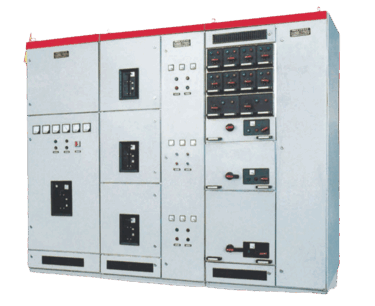
SWITCHGEAR Selection Guide for B2B Buyers
In the power transmission and distribution system, switchgear is a core equipment that undertakes the key functions of power control, protection and monitoring. For B2B buyers, choosing a suitable switchgear is directly related to the safety and stability of the project, operation and maintenance efficiency, and long-term cost control. Whether it is a large-scale power project, petrochemical project, or residential area power distribution and industrial plant construction, a high-quality and scenario-adaptable switchgear is indispensable.
However, many B2B buyers often fall into misunderstandings such as “only focusing on price”, “pursuing high parameters blindly” and “ignoring scenario adaptation” when selecting switchgear, which leads to operational failures, soaring maintenance costs and shortened equipment service life in the later stage. Combining years of experience in the electrical industry and high-quality manufacturer technical data, this guide is compiled to help B2B buyers avoid common mistakes and select the right switchgear quickly.
1. Clarify Core Needs: 3 Dimensions to Lock the Selection Direction
The core of selection is “adaptation” rather than “pursuing high-end”. Clarify the following 3 core needs first, then screen products, which can greatly improve selection efficiency and avoid mistakes:
- Clarify voltage level and load requirements: First, distinguish between high-voltage switchgear (such as 40.5kV, 12kV) and low-voltage switchgear (such as 0.4kV). Combine the voltage level, rated current, short-circuit breaking current and other core parameters of your own project to avoid “overkill” or “insufficient parameters”. For example, industrial plants and large substations mostly use high-voltage switchgear (such as KYN61-40.5/Z type, rated voltage 40.5kV, rated current up to 2000A), while residential area power distribution and small shops are more suitable for low-voltage switchgear (such as MNS, GCS type).
- Clarify usage scenarios and environmental requirements: Different scenarios have different requirements for the protection level, anti-interference ability and installation method of switchgear. For outdoor use, choose cabinets with waterproof, dustproof and anti-aging properties (protection level not lower than IP23); for corrosive environments (such as petrochemical industry), choose anti-corrosion material cabinets; for places with large vibration, consider shockproof design. At the same time, altitude and ambient temperature will also affect the selection. If the altitude exceeds 1000m, communicate with the manufacturer in advance to adjust parameters.
- Clarify operation and maintenance and automation needs: If you pursue convenient operation and maintenance, you can choose maintenance-free or less maintenance switchgear (such as SF6 gas-insulated switchgear with fully sealed structure, which reduces maintenance workload); if you need to realize distribution network automation, you can choose switchgear with “four remote” functions and configurable automation terminals (RTU), which is convenient for remote monitoring and fault troubleshooting.
2. Core Selection Points for B2B Buyers (Avoid 90% of Mistakes)
- Don’t only focus on price, ignore quality and certification: High-quality switchgear must pass strict quality certifications, such as ISO9001 quality management system certification, ISO14001 environmental management system certification, and national mandatory “CCC” certification. Some high-voltage products also need to comply with national standards such as GB/T17467 and DL/T537. At the same time, the production process is also crucial. Cabinets processed by CNC punching, shearing and bending equipment with multi-fold edge technology have high precision, good strength and can effectively improve equipment stability.
- Don’t pursue high parameters blindly, ignore scenario adaptation: The rated current, short-circuit breaking current and other parameters of switchgear are not the higher the better, but should be reasonably selected according to their own load needs. For example, for small residential area power distribution, switchgear with rated current of 630A can meet the needs. Blindly choosing products with parameters of 1250A and above will greatly increase procurement costs and improve later maintenance difficulty.
- Don’t ignore protection level and material selection: Protection level directly affects the service life and operation safety of switchgear. For outdoor use, choose products with protection level of IP43 and above to prevent rainwater and dust from entering the equipment; for indoor use, choose IP23 and above according to environmental cleanliness. In terms of cabinet materials, imported aluminum-zinc coated steel plate and stainless steel have strong anti-corrosion and anti-oxidation capabilities, suitable for long-term use; cold-rolled steel plate and color steel composite plate are more suitable for indoor conventional scenarios with higher cost performance.
For B2B buyers, choosing the right switchgear is the key to ensuring project smooth operation. If you have specific project needs (such as voltage level, scenario, load parameters), you can contact us for customized selection suggestions.