Address
304 North Cardinal St.
Dorchester Center, MA 02124
Work Hours
Monday to Friday: 7AM - 7PM
Weekend: 10AM - 5PM
Address
304 North Cardinal St.
Dorchester Center, MA 02124
Work Hours
Monday to Friday: 7AM - 7PM
Weekend: 10AM - 5PM

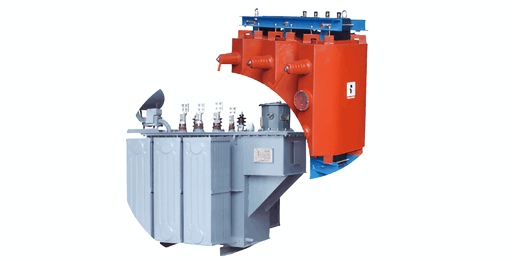
Step-by-step guide to distribution transformer kVA calculation. Learn the formulas, load estimation, safety margins, standard ratings, and how to select the right transformer.
Correct transformer sizing is essential for reliable power distribution in factories, workshops, commercial buildings, residential complexes, and construction sites. An undersized transformer leads to overload, overheating, voltage drops, and premature failure. An oversized transformer increases initial investment and no-load energy loss.
This article provides a clear, practical method for calculating kVA requirements and selecting the right distribution transformer for your facility. We use real industrial examples and reference JGELEC’s S11, S13, S20 oil-immersed transformers and SC(B)13, SC(B)H15 dry-type transformers.
Step 1: Calculate Total Connected Load (kW)
First, list all electrical equipment and their rated power. Sum the total power in kilowatts (kW).
For factories, include motors, compressors, lighting, heating, ventilation, and other machinery.
Step 2: Apply Power Factor (PF)
Industrial power factor generally ranges from 0.8 to 0.9.
Use the formula:
kVA = kW / Power Factor
Example:
Total load = 800 kW
PF = 0.8
Calculated kVA = 800 / 0.8 = 1000 kVA
Step 3: Add a Safety Margin
Reserve 10%–25% extra capacity for:
Example:
1000 kVA × 1.2 = 1200 kVA
Round up to standard 1250 kVA transformer.
Step 4: Select Standard kVA Rating
Common standard ratings:
400kVA, 630kVA, 800kVA, 1000kVA, 1250kVA, 1600kVA, 2000kVA
JGELEC provides all standard sizes and can also customize non-standard ratings for special projects.
Step 5: Confirm Voltage, Vector Group, and Impedance
These parameters ensure stable parallel operation and grid compatibility.
Step 6: Choose Oil-Immersed or Dry-Type
FAQ
Q1: What happens if a transformer is undersized?
A: It will overheat, trip protection devices, cause unstable voltage, and shorten service life.
Q2: Can I use a transformer larger than my actual load?
A: A small margin is acceptable, but excessive oversizing increases no-load loss and electricity costs.
Q3: What size transformer do I need for a 500kW load?
A: With PF=0.8, you need at least 625 kVA. Choose the standard 630kVA transformer.
Q4: What are the most commonly used kVA sizes for factories?
A: 630kVA, 800kVA, 1000kVA, and 1250kVA are the most popular.
Q5: Does JGELEC provide calculation support?
A: Yes, we offer free professional sizing and selection service based on your load list.
Q6: Should I consider high-efficiency models for my factory?
A: Yes. S20 oil-immersed and SC(B)H15 amorphous alloy transformers reduce long-term energy costs significantly.
Call to Action
Accurate kVA sizing ensures energy efficiency and operational stability. Send us your load data, and JGELEC will provide a professional transformer selection plan, datasheet, and quotation.
